The Career That Shaped a Style Icon
Few actors have navigated the transition from teen idol to respected producer with the agility Brad Pitt has demonstrated across a career now entering its fifth decade. His early work in Thelma & Louise and A River Runs Through It established a physical presence that could have easily confined him to romantic leads, but his choices quickly signalled broader ambitions. The 1990s saw him collaborate with David Fincher on Se7en and Fight Club, roles that weaponised his beauty by distorting it — a pattern he would revisit with the Coen brothers in Burn After Reading and with Tarantino across multiple films. His Oscar-winning turn as Cliff Booth, the loyal stuntman with a mysterious past, felt like a summation of everything Pitt does well: relaxed, physically precise, and quietly magnetic.
Pitt's style evolution has tracked his career with unusual coherence. Where many male stars of his generation ossified into a single look — the suit, the tuxedo, the casual uniform — Pitt has remained stylistically restless. His red-carpet appearances have included everything from rumpled linen and oversized sunglasses at Cannes to sharp, minimalist tailoring at the Academy Awards. The thread connecting these divergent moments is a refusal to be pinned down by any single aesthetic, a quality that makes his eyewear choices particularly instructive.
A Masterclass in Restrained Eyewear
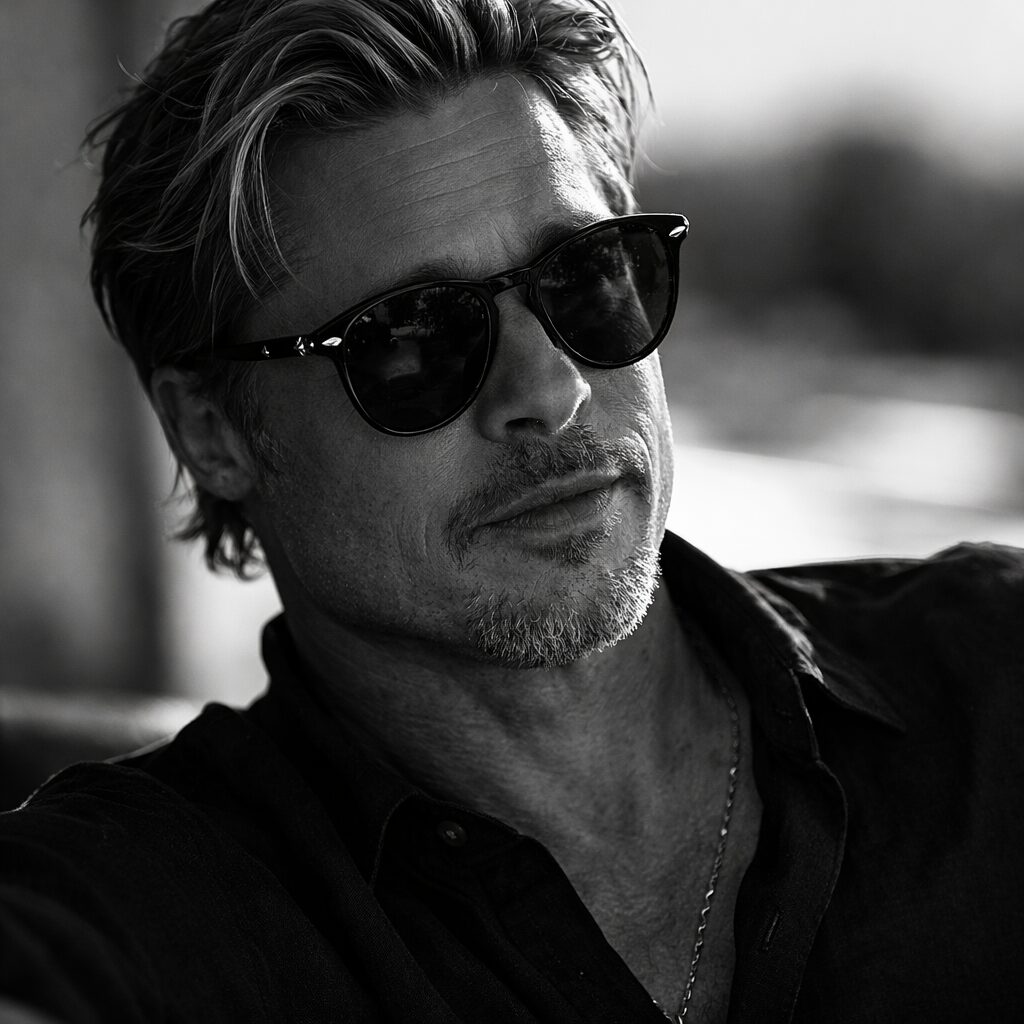
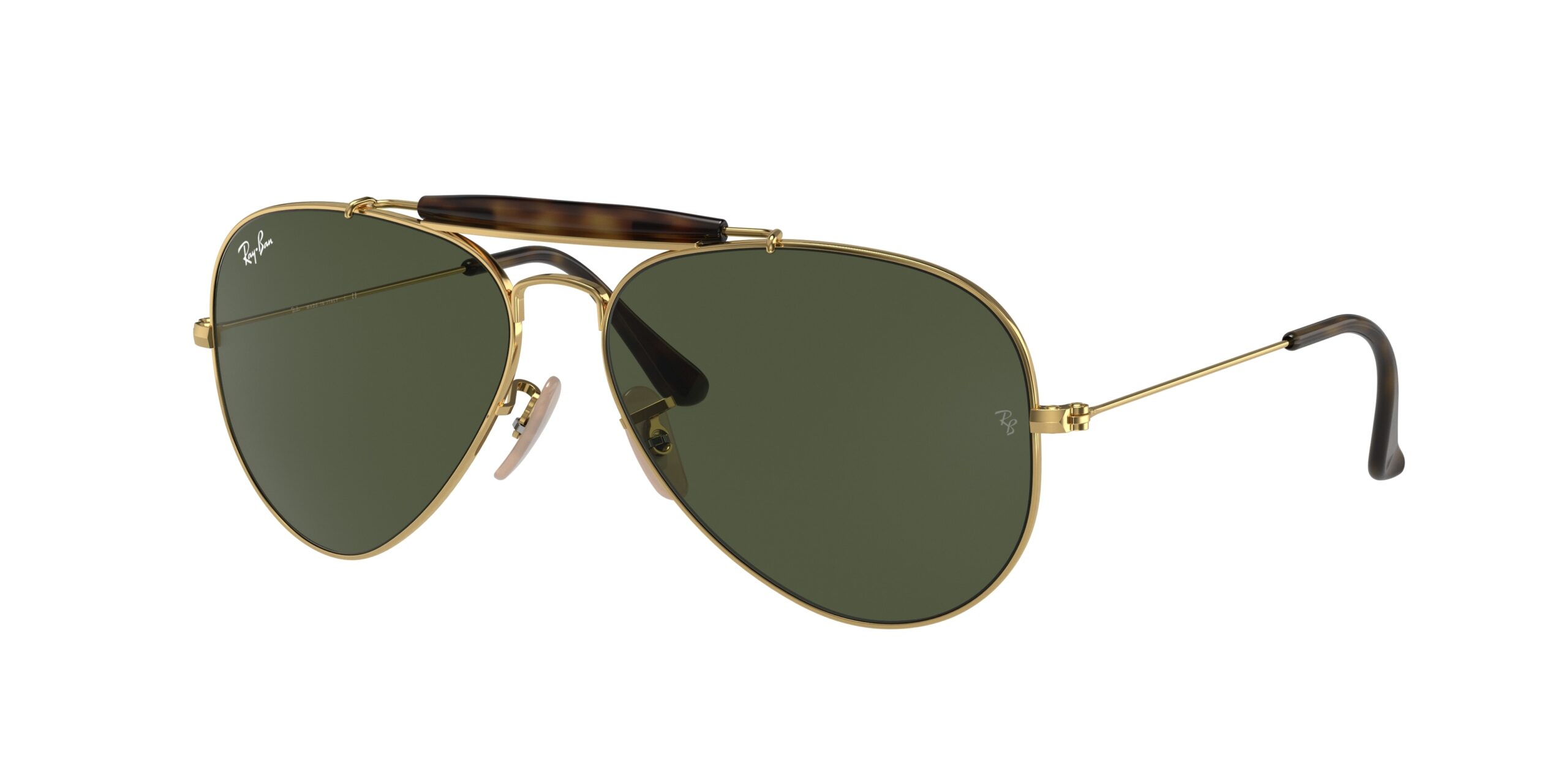
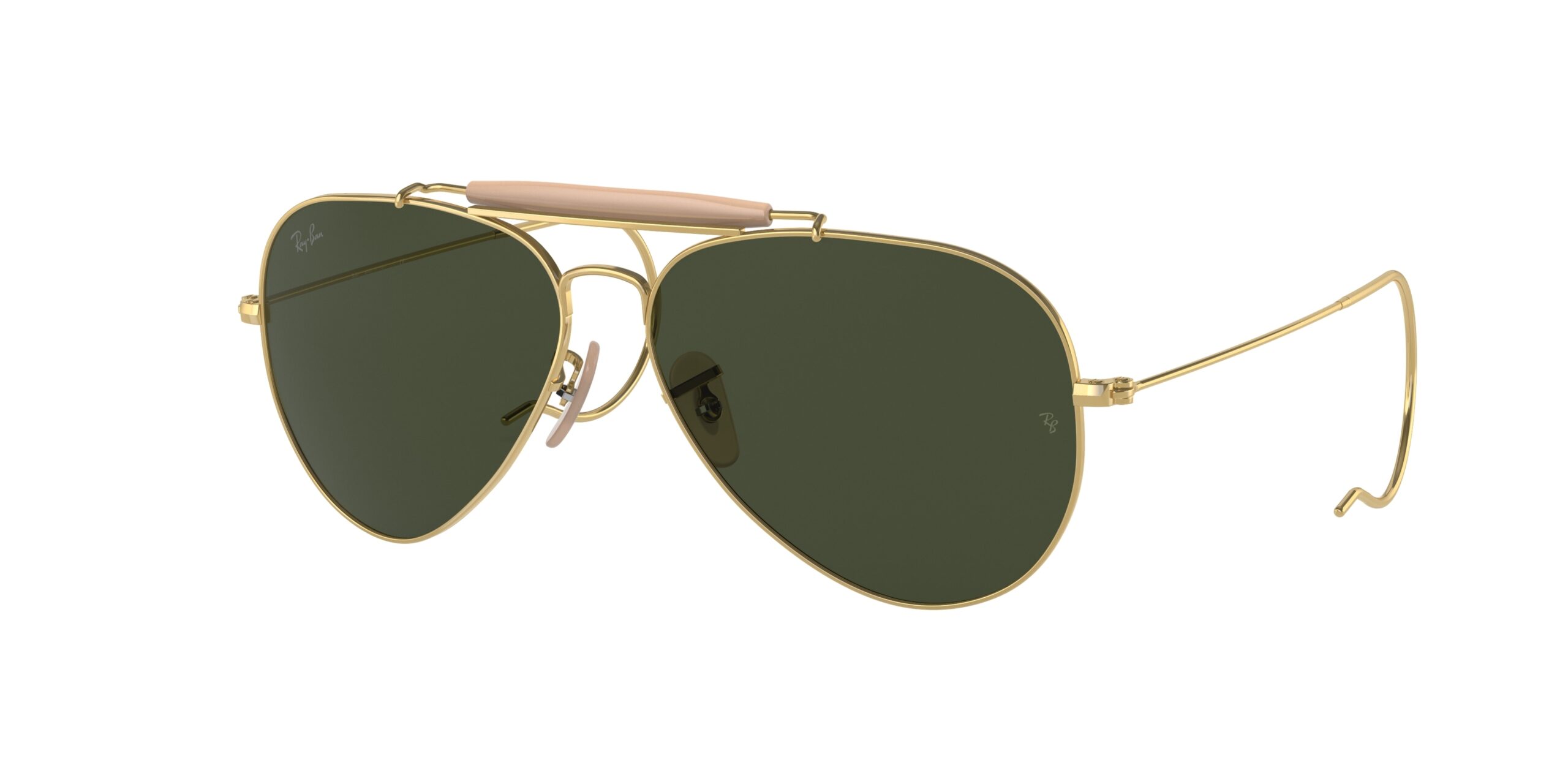
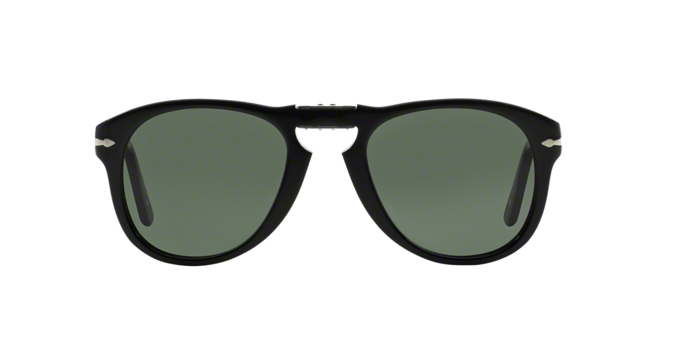
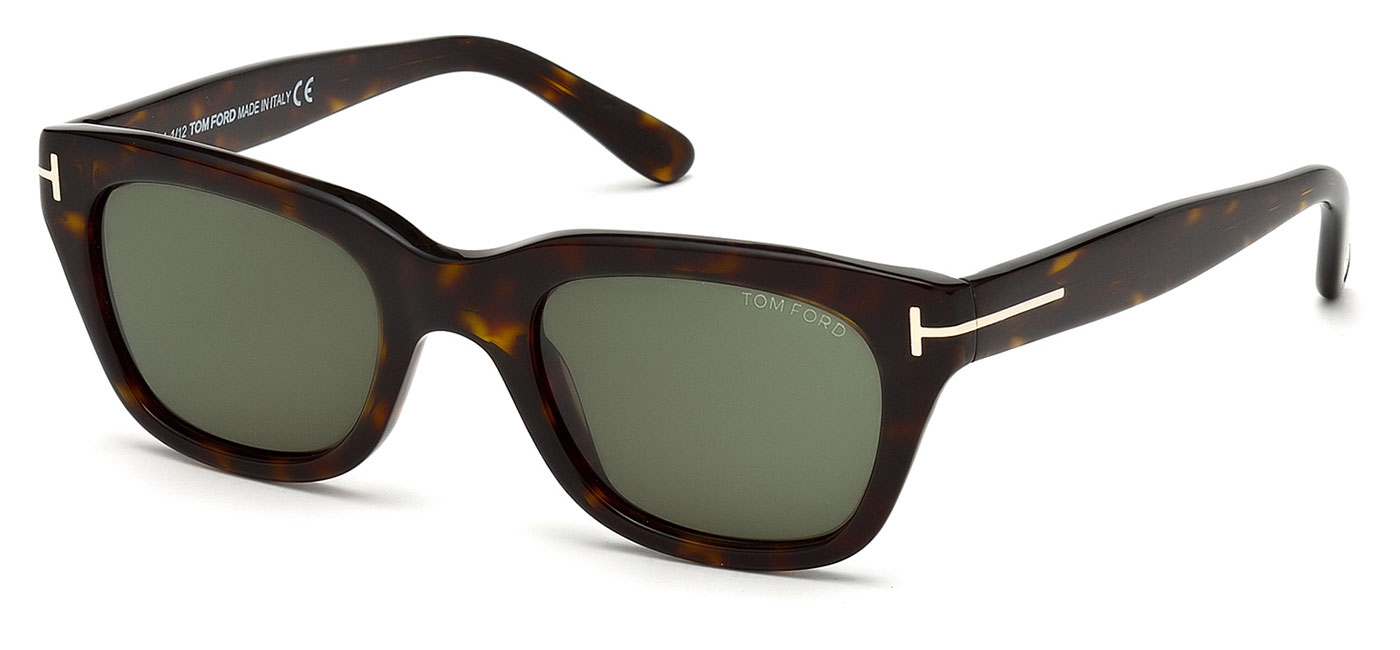
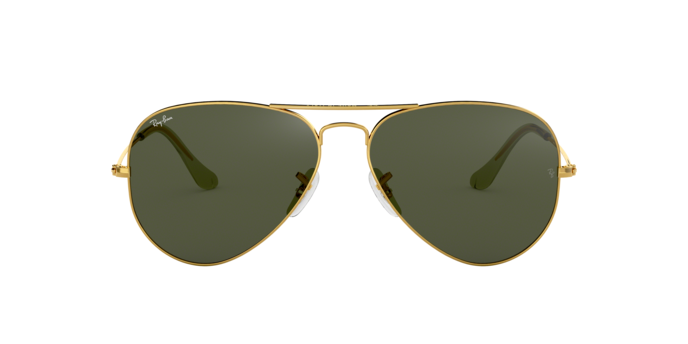
If there is a unifying principle behind Brad Pitt's approach to sunglasses, it is that the best frames do not announce themselves. He gravitates toward designs with deep roots in the eyewear canon — the Ray-Ban Aviator, the Wayfarer, occasionally a slender metal frame in gold or silver that feels more European in its restraint. Tortoiseshell acetate appears frequently, lending warmth to his angular features without the severity of solid black. Tinted lenses, when they appear, tend toward warm ambers and light browns that soften rather than obscure — a choice that feels consistent with someone who has spent decades being photographed and has made a kind of peace with visibility.
On Pitt, sunglasses rarely feel like an attempt to hide. Instead, they read as punctuation: a way of finishing a look that is already complete. This is harder to achieve than it sounds. Many celebrities treat eyewear as a barrier; Pitt treats it as a detail. The difference is visible in the way his frames sit on his face — never too tight, never too large, always proportionate to his features. It is the kind of judgment that comes from years of working with costume designers and photographers who understand proportion at a professional level.
What Brad Pitt Teaches Us About Timeless Style
The lesson embedded in decades of Brad Pitt photographs is that consistency outlasts novelty. His eyewear choices have never been about chasing the latest release or the most recognisable logo. Instead, they reflect a curatorial instinct — the same instinct that made Plan B one of the most respected production companies in the industry. He chooses frames that will look as good in twenty years as they do today, and in doing so, he offers a template for anyone looking to build a personal style that rewards patience over impulse. In a world of constant trend cycles, Pitt's relationship with sunglasses stands as a quiet argument for the enduring value of getting it right and leaving it alone.