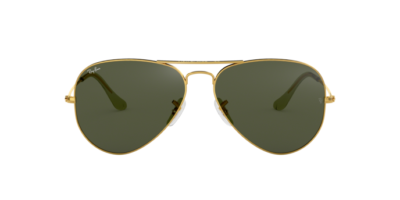
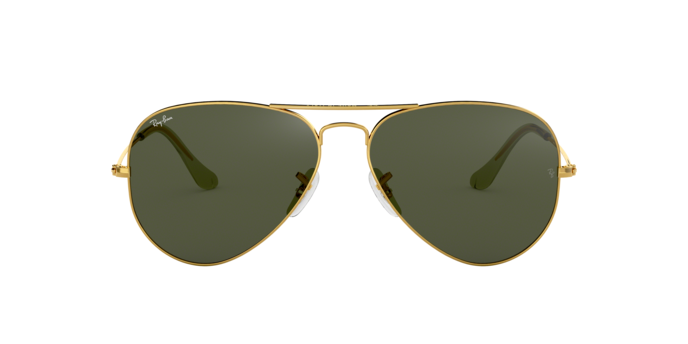
In New York City, Hailey Bieber wore the Ray-Ban RB3025 Aviator in a classic gold and green lens combination. The Aviator has been worn by everyone from fighter pilots to rock stars, and Bieber reinforced its ongoing relevance with an outfit calibrated for impact at minimum volume. She paired the frames with an oversized leather trench coat, a simple white ribbed tank, faded vintage-wash denim, and pristine white sneakers. A delicate gold chain necklace, thin rings stacked across several fingers, and a black leather shoulder bag added texture without threatening the clean lines of the ensemble.
The RB3025 descends directly from the original Aviator developed for the US military in the 1930s, a frame that has spent nearly a century adapting to every cultural shift without losing its essential character. On Bieber, the teardrop lenses and thin gold frame served as both a nod to history and a statement about the present: that some designs don't need reinvention, they just need the right person wearing them in the right light. Against Manhattan's grid of glass and steel, the Aviator held its ground.
The Ray-Ban RB3025 Aviator is one of the most recognizable sunglasses designs in the world. Originally developed for pilots in 1937, its signature teardrop lenses and lightweight metal frame have made it a timeless style icon.
The slim frame, adjustable nose pads, and large lenses provide a comfortable fit and excellent sun protection. The model is most commonly available with classic G-15 green lenses, designed to reduce glare while maintaining natural color contrast.
With its clean, versatile design, the RB3025 remains a favorite among celebrities, athletes, and fashion icons, making it a staple in both casual and sophisticated looks.

To provide you with the best possible experience, we use technologies such as cookies to store and/or access device information. If you consent to these technologies, we may process data such as browsing behaviour or unique IDs on this website. If you do not give your consent or withdraw it, certain features and functions may be impaired.